Viral Isn't Luck: What Makes Content Spread
TLDR (for busy brains)
Direct answer: Virality isn't random luck. it's the result of behavioral psychology (fast comprehension, high-arousal emotion, identity signaling) combined with platform ranking systems that reward predicted user actions like saves, shares, and watch time.
Virality = attention physics + platform incentives + human psychology. You don't "go viral." A platform's ranking system tests your content against predicted actions.
Three practical models:
1. Viral mechanics: the post wins when it triggers fast comprehension and a strong "action prediction" (watch time, saves, replies, shares). 2. PPC reality: auctions behave like a confidence system, not a simple bid war. Higher confidence lowers effective cost. 3. Tracking reality: attribution is inference. Signal quality degrades as the journey fragments across devices, apps, and privacy layers.
If you want repeatable outcomes, your job is to build a system that can survive attention spikes and still convert the right people.
---
The problem with "vibes"
Most teams treat marketing like weather:
- "This one did well. Let's do more of that." - "This one flopped. The algorithm hates us."
That isn't analysis. That's superstition.
What is actually happening is closer to a scoring system:
- A platform predicts what you will do next. - It tests content on a small audience segment. - It expands distribution if the predicted actions occur.
This is why the same "trend" can produce radically different outcomes across accounts. The format isn't the strategy. The underlying signals are.
---
1. Viral mechanics aren't mystical. They are behavioral economics plus ranking math.
Why "ridiculous" trends spread
Some viral formats win because they are cognitively cheap:
- You understand the point instantly - You can participate with minimal effort - You get social proof reinforcement quickly
That isn't "taste." That's friction minimization.
The psychology layer (what humans do)
A few common mechanisms behind sharing:
- Social proof: people copy visible behavior when uncertain - Emotion + arousal: content that triggers high arousal spreads faster than neutral content - Identity signaling: "this is me" content is disproportionately sticky - Curiosity gaps: people stay to close the loop
The math layer (what platforms do)
Platforms aren't optimizing for "quality." They are optimizing for retention and predicted actions.
In plain language:
- If viewers stop scrolling, the test improves - If they save or share, the test improves - If they reply meaningfully, the test improves - If they bounce quickly, distribution collapses
This is why your first frame or first line matters more than your conclusion.
Practical insight: A clever post that requires context is often punished, even if it's "better." Comprehension is the gate.
---
2. PPC is a confidence system, not a bidding war
People talk about PPC like it's purely budget:
- "Competitors outbid us." - "CPC went up because the market is crowded."
Partly true. But incomplete.
A more useful mental model
In auctions, platforms reward what they believe will produce a good user outcome:
- Relevant ad - Strong expected engagement - Strong expected conversion experience
When the platform has higher confidence in your ad and landing experience, your effective cost can drop relative to a competitor's even if you bid similarly.
That's why PPC doesn't behave like a clean spreadsheet. It behaves like probabilistic pricing.
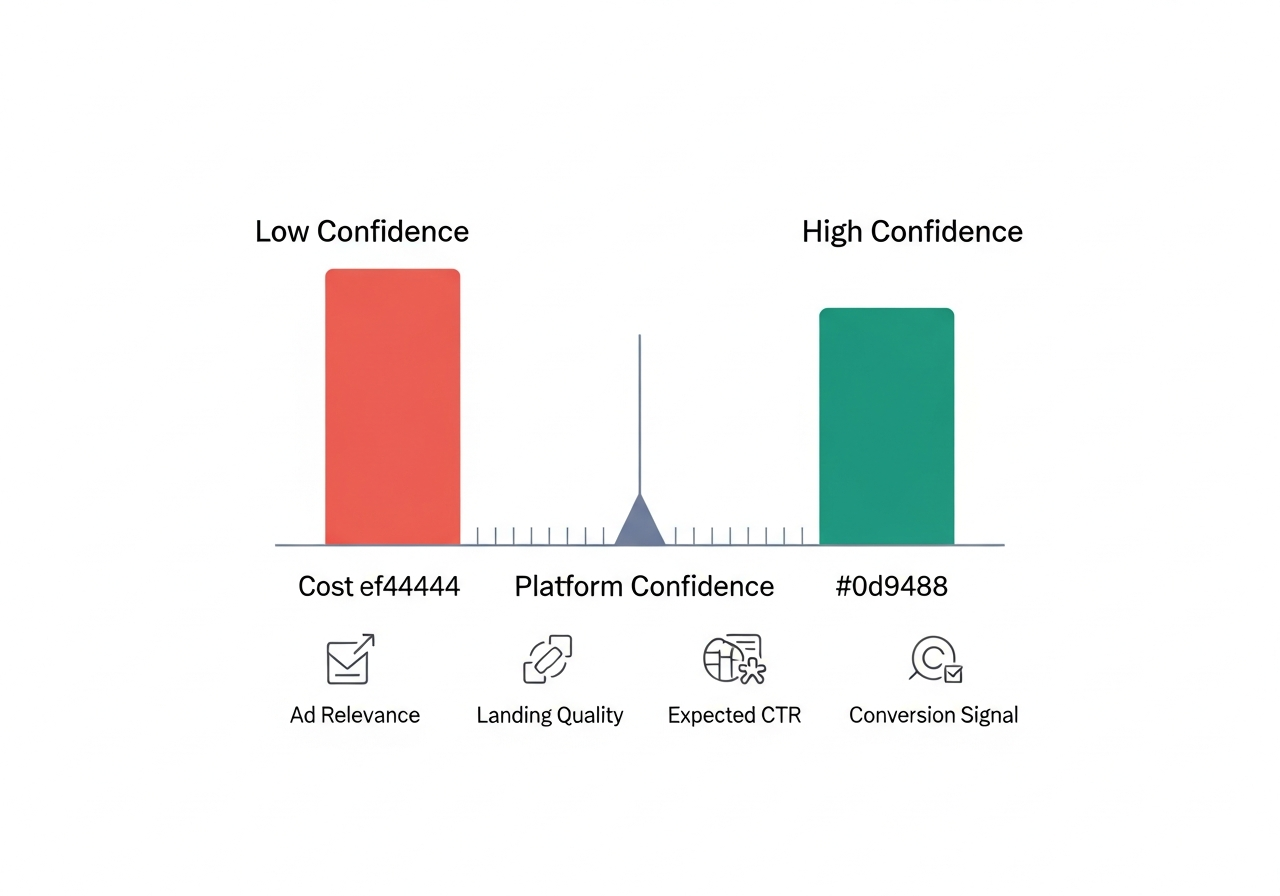
Decision rule: Before you increase spend, increase confidence:
- Clarity of promise - Speed of page - Proof density - Clean intent path
This changes the economics.
---
3. Tracking is inference, not truth
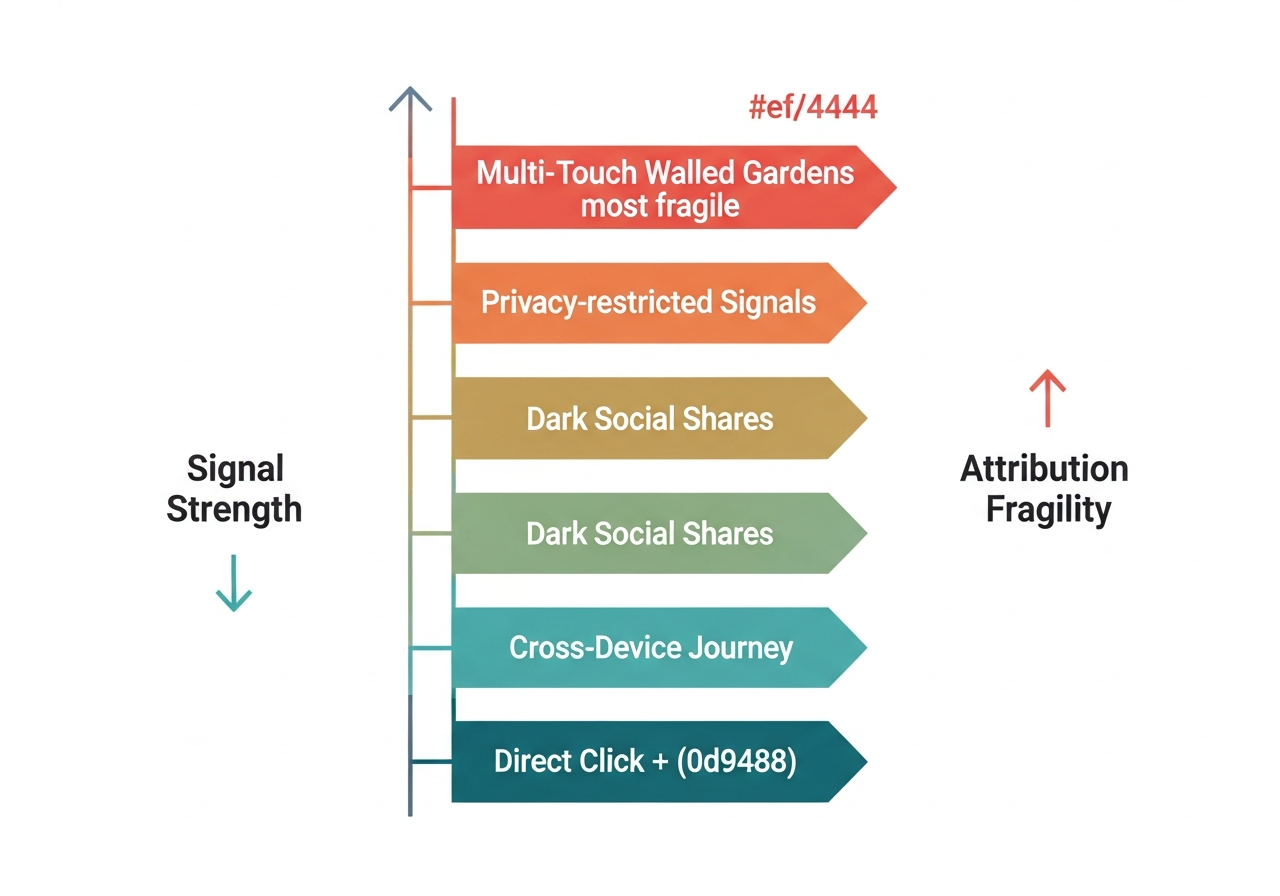
Teams still talk about "what caused the sale" like the journey is one linear path. It isn't.
Modern journeys fragment:
- Multiple devices - Multiple apps - Dark social (DMs, private shares) - Privacy restrictions and consent states - Walled gardens
So attribution becomes a best-guess model based on incomplete observations.
What to measure instead
You need "quiet signals" that correlate with intent:
- Saves - Meaningful replies - Qualified DMs - Repeated visits - Completion of high-friction steps (forms, demos, bookings)
These are harder to fake than likes.
Decision rule: If the metric is easy to produce accidentally, it isn't a planning metric.
---
The operator model: Culture, Signal, System
When something unexpected goes viral, the question isn't "should we copy it."
The questions are:
1. Culture: what behavior is spreading, and why is it easy to adopt? 2. Signal: what is the platform rewarding right now? 3. System: what must be true operationally for attention to turn into qualified action?
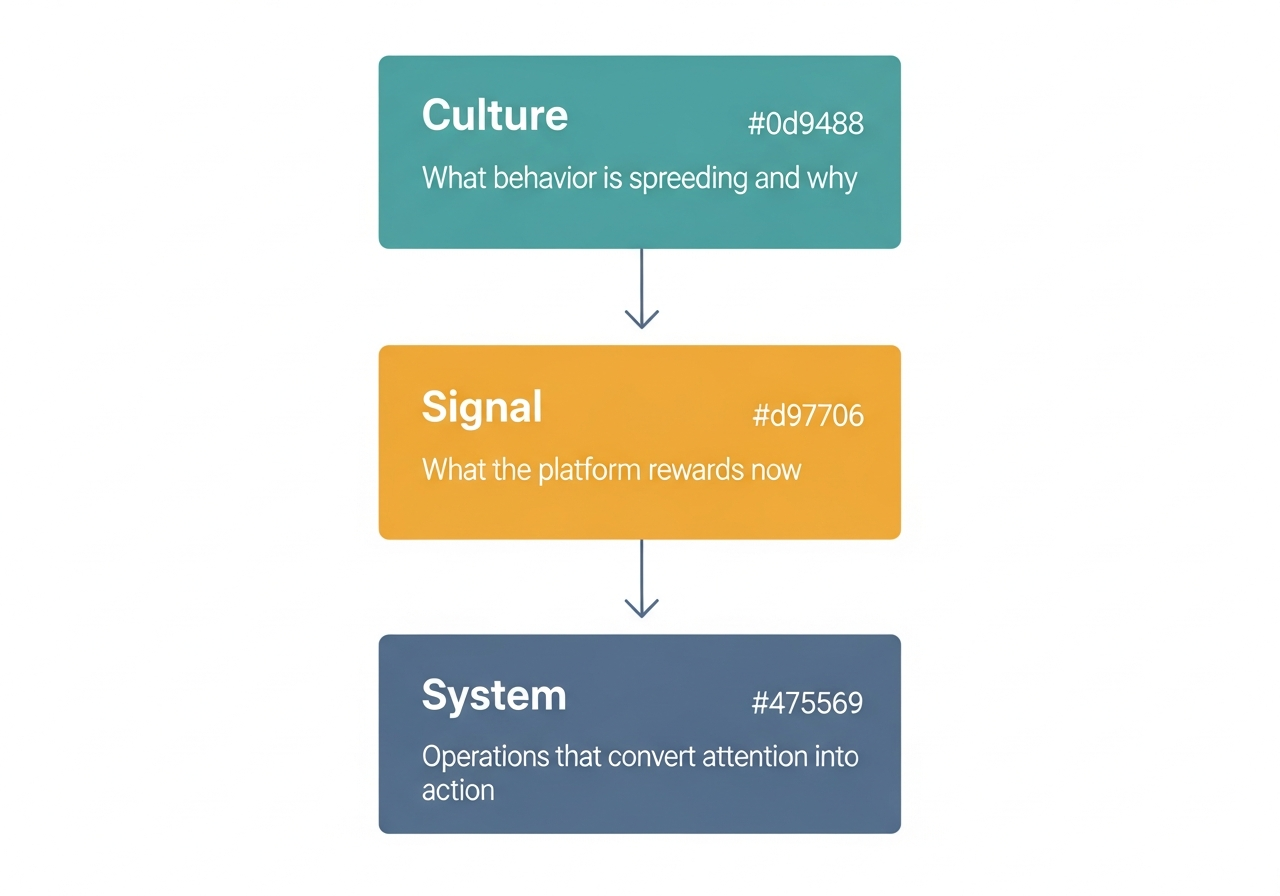
This keeps decisions grounded when the feed is noisy.
---
A simple diagnostic you can run this week
Pick one piece of content and run a "mechanics audit":
1. First-line comprehension test. Can someone explain the point after 7 seconds? 2. Proof test. Is proof visible in the same screen where the claim appears? 3. Intent path test. If someone is interested, is the next step obvious and low friction? 4. Measurement test. Are you measuring something correlated with intent, not applause?
If any of these fail, it isn't a "creative problem." It's a system problem.
---
Closing
If you want marketing that behaves less like gambling and more like a controlled experiment, that's what Veriqo Studio is built for.
We work with teams who want:
- Clarity that can be repeated - Systems that survive attention spikes - Measurement that reflects reality, not mythology
If you want a structured diagnostic of your current content and campaign systems, the Website Messaging Scorecard is a practical starting point. For a broader review, explore our engagement options or get in touch.